Insurance guide
Roof Insurance Claims, Explained for Lowell, AR
A hail claim is a documents game with a weather question inside it. This guide explains how the process usually moves for Lowell homeowners, what makes claims resolvable and where the honest limits are. It is general information, not legal or claims advice.
- General information · not claim representation
- Dated evidence · roof findings and weather records each have a role
- Deductible honesty · small damage should not be filed
The boundary
Age is maintenance, storm damage is a claim
Homeowner policies cover sudden storm damage: hail bruising, wind-torn shingles, a limb through the decking. They do not cover wear, age or deferred maintenance. The distinction matters to coverage. Roof findings, available weather records and the policy are considered together; a nearby report cannot date damage on its own.
Lowell has the dates. The reports for April 28, 2026 and every event back to 2020 sit on the Lowell storm history page, each linked to its NOAA record. A finding from the roof, weighed against that dated record, is a very different conversation than a hunch. The reports say what was observed nearby; only the roof says what happened to the roof.
The sequence
How a hail claim usually moves
Look before deciding
A free inspection establishes what is actually damaged on your roof, which is the only place a claim can start. If damage is minor or absent, that finding saves you a claim.
File with the facts
You report the claim with the date and documentation. The insurer assigns an adjuster and sets an inspection.
The adjuster meeting
The roofer's findings and the adjuster's walk happen on the same roof, ideally together, so scope gets discussed over the same evidence instead of by letter.
Scope, then work
Approved scope becomes the written project; differences get reconciled with documentation. The work follows the paper, not the adrenaline.
The file that works
What good storm documentation includes
Claims resolve on evidence quality. The file that works contains:
- Date-matched reports: the NOAA record for the storm being claimed
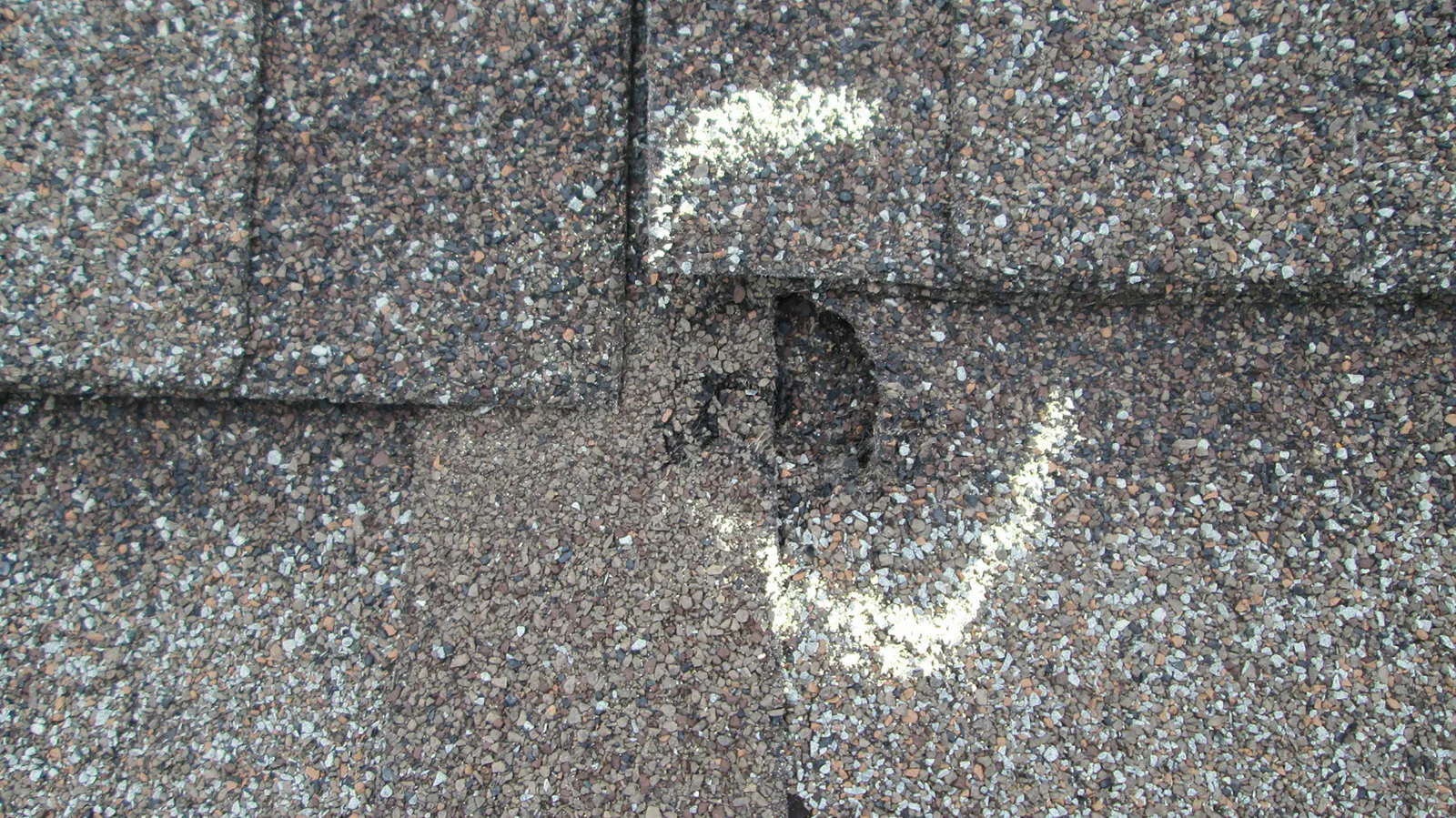
- Real documentation marked impacts beat wide shots and doorstep opinions
- Collateral evidence: dents in gutters, vents and other soft metal, hail's corroborating witnesses
- The interior timeline: when stains appeared relative to the storm date
If documented damage prices near or under your deductible, filing gains you little and puts a claim on your record. An honest roofer tells you that before you call anyone. Small damage is a repair conversation, not a claim.
Fair questions
Claim questions homeowners actually have
Will filing a claim raise my rates?
No general answer is honest here: pricing depends on your insurer, your history and how storms have treated the whole area. Weather claims in a widely-hit region are often treated differently than one-off claims, but the only reliable answer comes from your policy and your agent.
How long do I have to file?
Your policy sets the deadline, and reading it beats any rule of thumb a website could offer. What is universally true: documentation gets harder as months pass, so having the roof checked soon after a storm date keeps every option open.
The insurer said wear and tear. Is that final?
Not necessarily. Denials get revisited when better evidence arrives: marked impacts, date-matched reports, a joint re-inspection. That is where documentation from the storm damage page earns its keep. What this site will not promise is any outcome; policy language and the insurer decide.
What does the roofer do during the claim?
Document, explain and meet: produce the findings, walk the adjuster through them and build the scope for the approved work. Decisions about filing belong to you; a roofer who pressures you into a claim is telling you something about themselves.
Facts first
Start with the evidence
Before any filing decision, get the roof looked at free. Facts first makes every later step easier.