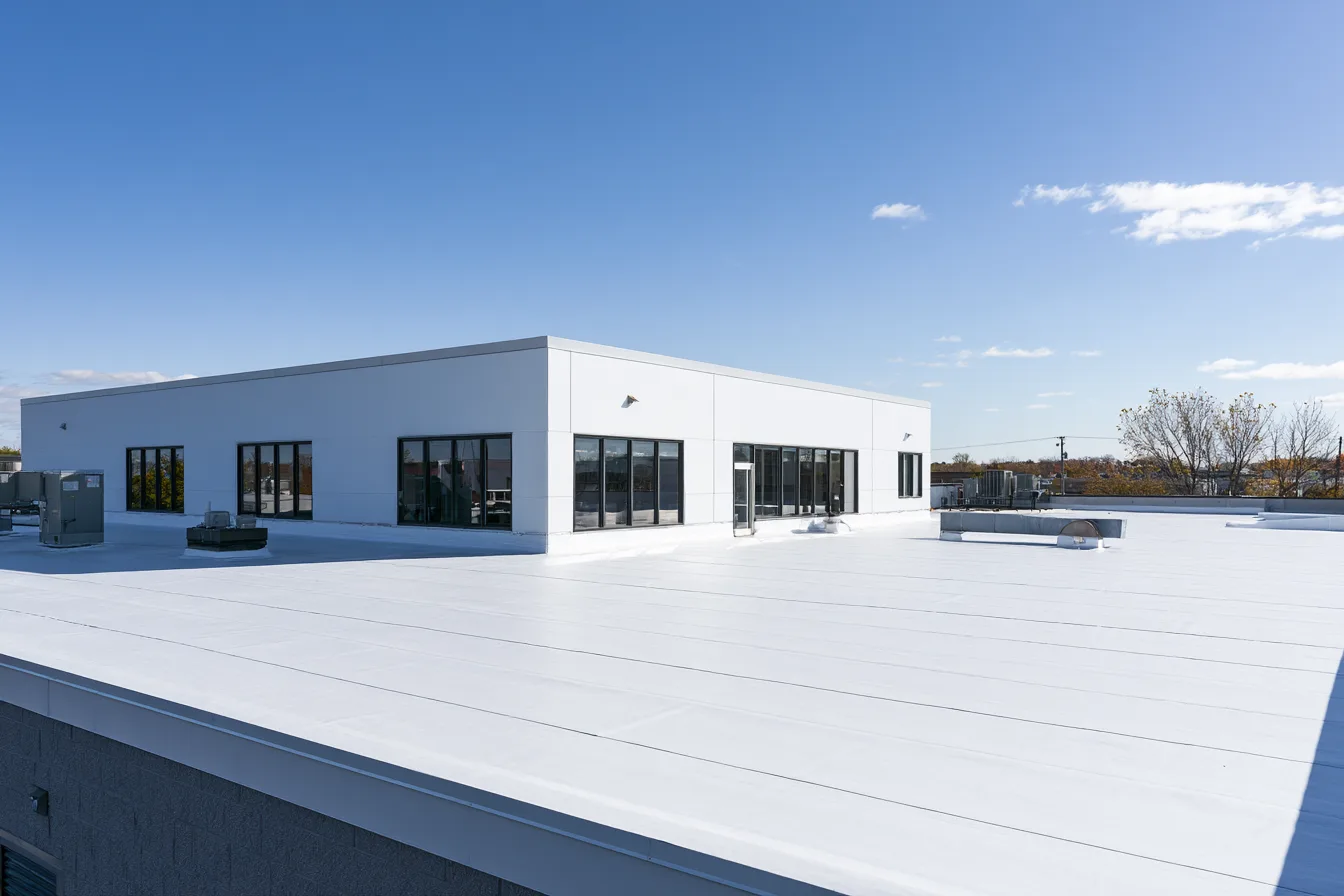
Commercial roofing
Commercial Roofing in Lowell, AR
Water over a sales floor, stockroom or occupied office is a building problem as well as a roof problem. Commercial roofing in Lowell starts with the membrane, the layers below it and the way the work can fit the property’s use.
- Low-slope work, treated as its own trade · TPO, coatings and repair
- Building use included · access, equipment and occupied spaces affect the scope
- Evidence first · decisions start from the actual roof, not a guess
The market
Lowell has more roof than it looks like
Lowell is home to J.B. Hunt’s headquarters, while the I-49 and US 71B corridor includes offices, warehouses and service buildings. These roofs protect occupied rooms and stored goods as well as the building shell. The roof assessment needs to account for that use alongside the membrane and drainage.
A low-slope roof still needs a route to drains or scuppers. Insulation, membrane seams and the flashing around equipment have different roles in keeping the building dry. The assessment brings those roles together before selecting repair, restoration or replacement.
The disciplines
Commercial roofing services
Three pages, three different jobs. Each one starts with the same honest assessment.
TPO & Membrane Roofing
Single-ply systems for full replacements and re-covers, with the seam and insulation decisions explained.
Explore TPO & membraneRoof Coatings
Assess whether the roof is dry, secure and suitable for a compatible restoration system.
Explore coatingsFlat Roof Repair
Seams, punctures, flashings, drains and ponding fixed with compatible materials, not mastic guesswork.
Explore flat roof repairEarly signals
What a low-slope roof does when it is struggling
These observations give the roof inspection useful starting points. They need to be interpreted on the actual system.
- Ponding water that outlasts 48 hours after rain, especially in new places
- Open or fish-mouthed seams where welds or laps are letting go
- Blisters and soft spots underfoot, moisture working under the surface
- Clogged drains and scuppers turning the roof into a bathtub
- Interior stains after wind-driven rain that dry up and get forgotten until the next front
How it runs
Scheduled around the building, not the other way around
Walk the actual roof
The assessment reads the roof itself: membrane condition, seams, flashings, drains and any wet areas, so decisions start from evidence.
Rank the options honestly
Repair, restore or replace get ranked for this roof with the reasoning shown, not steered toward the biggest invoice.
Scope around the operation
Work windows, tenant access, loading zones and noise get planned with you before anyone shows up.
Work in the right order
Work sequence needs to account for removal, temporary protection and completing the roof details. Access and weather determine how that sequence can be carried out.
Ground rules
How commercial work is handled here
The roof gets read, not skimmed
Low-slope problems hide in details: a curb corner, a slack seam, a low spot two inches deep. A real assessment covers the field, the penetrations and the drainage.
Restore beats replace when the facts allow
A dry, stable roof may be worth retaining after repairs and surface preparation. Restoration needs to qualify on the actual condition; a failing base cannot be repaired by covering it.
Your operation outranks the crew's convenience
Work windows, equipment access, entrances and occupied rooms need to be identified in the project plan. Those details help define how the roofing can proceed around the building.
Owner questions
Owner and property manager questions
Is a small strip center or shop building worth your time?
Yes. A shop or small commercial building can need a focused repair, membrane work or restoration just as a larger property can. Include the building location and use when requesting help.
Can work happen while the building stays open?
Some work can proceed around occupied space; the actual scope determines the arrangements. Roof access, safety, equipment, materials and affected rooms need to be considered before agreeing on the sequence.
Repair, coat or replace: how is that call made?
By what the assessment finds, mainly how much moisture is in the assembly and how the seams and field are holding. Small local failures point to the flat roof repair page. An aging but dry roof may qualify for the roof coatings page. Saturated insulation or a failing field points to the TPO and membrane page. A ranking worth trusting arrives with the evidence that produced it.
Is an assessment worth it when nothing seems wrong yet?
Yes, and it is worth doing. Knowing a roof's actual condition on a known date helps inform future decisions: warranty conversations, storm claims, budgeting and the eventual replacement all lean on knowing what was true and when.
Start the file
Find out what the building’s roof needs
Start with a free assessment of what is up there, what condition it is in and which options fit the roof.