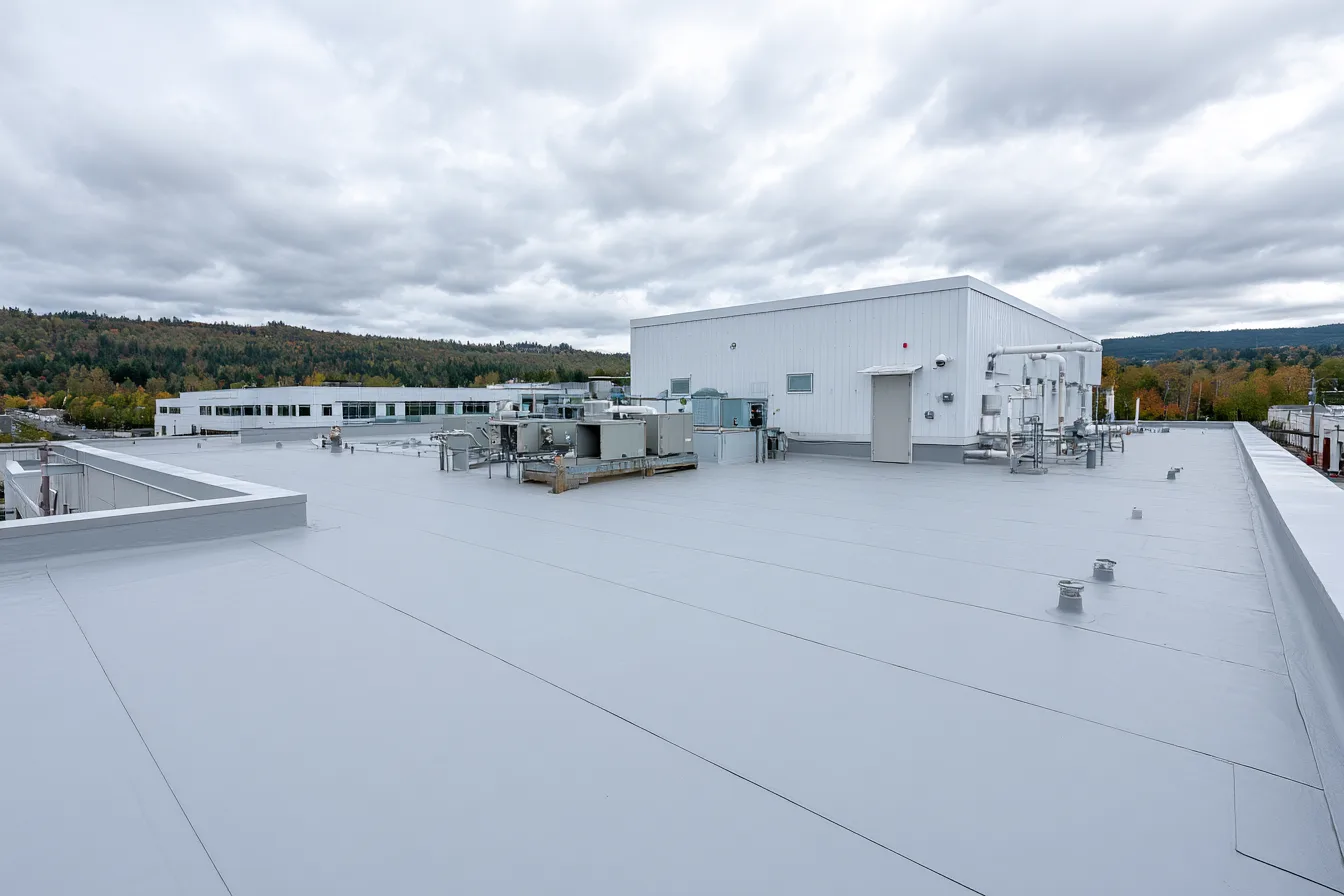
Flat roof repair
Flat Roof Repair in Lowell, AR
Water can travel below a low-slope roof before it appears in the building. A repair needs to reach the entry point and connect to sound membrane, with any wet material underneath included in the work.
- Traced to the breach · not patched at the drip
- Compatible materials · repair materials matched to the existing roof
- Storm-aware · nearby weather dates provide context, not a diagnosis
Mechanism
Low-slope leaks behave differently
Water entering a membrane can follow insulation joints or deck flutes before reaching a ceiling tile. A patch directly above the drip can leave the actual opening untouched.
The inspection relates the indoor symptom to seams, drains, curbs and other roof details. Moisture assessment may be needed to establish how far wet layers extend. That boundary determines how much material has to be opened.
The work
Common low-slope repairs
A repair needs both a sound connection and an explanation for why the detail failed.
Seam re-welds and re-seals
An opening in a thermoplastic seam may accept a compatible welded repair once the existing surface is prepared. Other membranes use their own bonding or tape systems.
Punctures and splits
A compatible patch extends onto enough sound, prepared membrane to form the connection the system requires.
Curb and wall flashings
HVAC curbs, walls and edge metal re-flashed where movement and sun have opened them.
Drains and scuppers
Cleared, re-flashed and re-sealed so the roof can do the one thing it must: drain.
Ponding correction
A blocked outlet and a low roof section need different work. Tapered insulation or drainage changes may be appropriate after the cause and supporting assembly are assessed.
Storm damage dry-ins
An exposed section can need temporary protection before permanent repairs. Safe access, weather and the condition of the building determine what can be arranged.
The path
From leak call to dry building
Report it
Give the building location, the affected room or space and any active leak. Roof system and access notes are helpful if known.
Trace and stabilize
Find the likely water route and determine the immediate protection needed. Temporary work and the permanent repair have different scopes.
Fix with compatible materials
The repair matches the roof system, welded or bonded the way its manufacturer intended.
Review the repaired detail
The repaired seam, flashing or outlet has to reconnect to the roof’s drainage path. Later equipment service also needs to protect that repaired surface.
Repair questions
Flat roof repair questions
Why not just coat the leak with mastic?
A repair product has to be compatible with the existing membrane. An unsuitable surface coating can interfere with the cleaning or bonding needed for a later repair. The correct method follows the roof system and the condition around the opening.
Is some ponding normal?
Brief water retention after rain is different from recurring water in a low area. The duration, depth and roof system matter. A blocked drain can be corrected locally; deck movement or inadequate slope may need a larger plan.
Can repairs happen while the building is occupied?
Localized repair can often be arranged around occupied spaces. The actual work needs to account for roof access, equipment, materials, noise and the affected rooms. Include the building’s use when requesting the inspection.
When do repairs stop being the answer?
Widespread wet insulation or deteriorated membrane can leave a patch without a sound place to end. A dry, stable roof may qualify for roof restoration; a failing assembly may need replacement rather than more isolated work.
Dry beats sorry
Stop the ponding and the drip
Tell us where water is appearing and what is happening in the space below it. Start with a free inspection of the roof and the repair it needs.