TPO & membrane
TPO and Membrane Roofing in Lowell, AR
A TPO roof needs a continuous membrane above a stable, dry assembly. If your Lowell building has an open seam, a recurring leak or a roof due for replacement, the choice starts with how much of that assembly can be kept.
- Heat-welded seams · the detail that makes or breaks single-ply
- Insulation decisions explained · R-value and substrate before membrane
- Honest alternatives · EPDM and PVC compared straight
The system
What TPO is, and where it fits
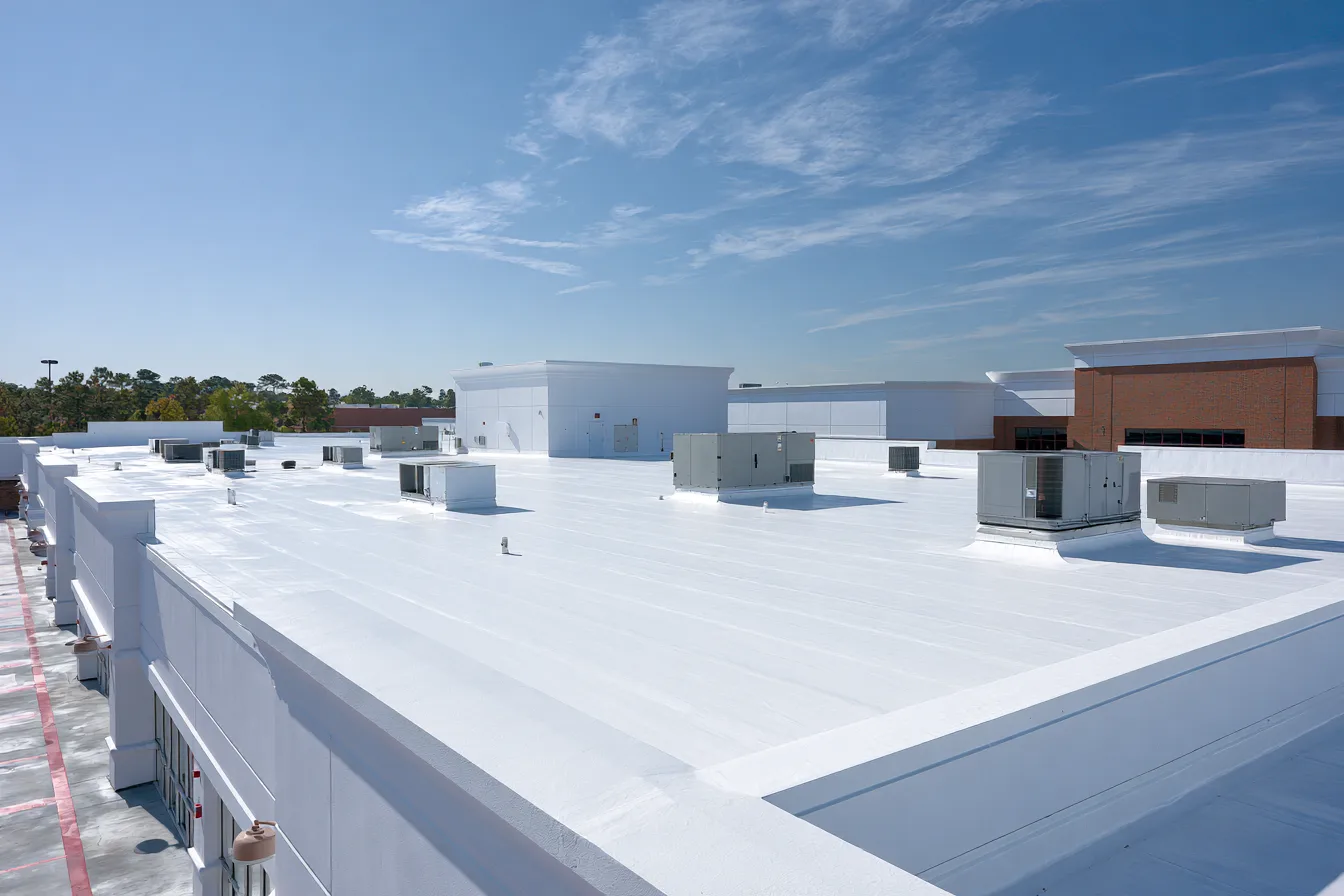
TPO is a thermoplastic membrane installed in sheets with heat-welded seams. Those joints connect the roof surface, while separate flashing closes the transitions at drains, edges and equipment curbs. A seam has to be made and checked for the selected product and site conditions.
A reflective membrane can reduce absorbed solar heat, but the insulation and the building’s operation also affect energy use. System selection brings the deck, insulation, attachment and finished sheet together; reflectivity alone does not predict a utility saving.
The project
What a membrane project covers
The sheet is the visible part. The decisions underneath it are most of the roof.
Assessment and moisture survey
The assessment establishes the existing layers and where moisture may be trapped. Wet areas need to be located and accounted for before deciding what roofing can remain.
Tear-off or re-cover decision
Code, moisture and deck condition decide whether the old roof comes off or can be covered over. It is a finding, not a preference.
Insulation and substrate
R-value, tapered slopes toward drains and a substrate the membrane can actually bond to. This layer carries most of the energy story.
Welded seams and terminations
The seams need sound, prepared surfaces and welding suited to the membrane. Edges and terminations then keep the joined field connected to the building.
Flashings, curbs and penetrations
Pipes, drains and equipment curbs interrupt the sheet. Compatible flashing returns water to the roof surface instead of leaving an opening around each interruption.
Documentation
A roof record is useful when it identifies the installed membrane, attachment, repaired areas and later alterations. That information supports maintenance and any applicable project warranty; the contractor’s actual scope establishes the records provided.
How the membrane is attached to the building
A welded seam joins one sheet to another. Attachment is a separate question: what holds those sheets and the layers beneath them to the roof?
Mechanically attached
The design uses fasteners and plates to secure the system to a suitable deck. Deck condition, fastening layout and the roof’s edges affect the assembly, even when the white surface looks the same.
Adhered
Adhesive bonds the membrane to a prepared substrate. That bond depends on a suitable surface, application conditions and secure attachment of the underlying layers.
The specified system brings the membrane, insulation, attachment and perimeter together. An attachment method is not a substitute for assessing the roof below it.
Options
TPO, EPDM and PVC at a glance
Which membrane, thickness and attachment method fit a specific building are assessment findings, not catalog preferences.
Membrane questions
Membrane roofing questions
How long does a TPO roof last?
There is no remaining-life answer from the material name alone. Membrane condition, attachment, drainage, rooftop traffic and maintenance all affect the roof. The inspection should identify whether the existing system is serviceable, locally repairable or ready for a larger project.
Does membrane thickness matter?
Yes, but it is one specification among several. Sheet thickness does not correct wet insulation, weak attachment or poor flashing. The proposed assembly needs to suit the building’s exposure and use, including any service traffic around rooftop equipment.
Can a new membrane go over the old roof?
Sometimes. A re-cover avoids tear-off cost, but only over a dry assembly and where code allows the added layer. The moisture survey makes that call; covering wet insulation seals a problem in.
Is a coating an alternative to a new membrane?
A dry, firmly attached roof with a compatible surface may qualify for restoration after repairs and preparation. The roof coatings page explains how moisture and adhesion findings separate a suitable candidate from roofing that needs replacement.
Facts first
Get a membrane roof assessed
Describe the roof problem or the replacement you are considering. A free roof inspection starts with the assembly on your building.