On the evening of April 28, 2026, a storm cell dragged hail across the middle of Benton County. In Lowell it measured two inches; four miles west at Cave Springs it measured four. Months later, the question that storm left over every roof it crossed is still open.
Blog September 9, 2026
What the April 28, 2026 Hail Means for Lowell Roofs
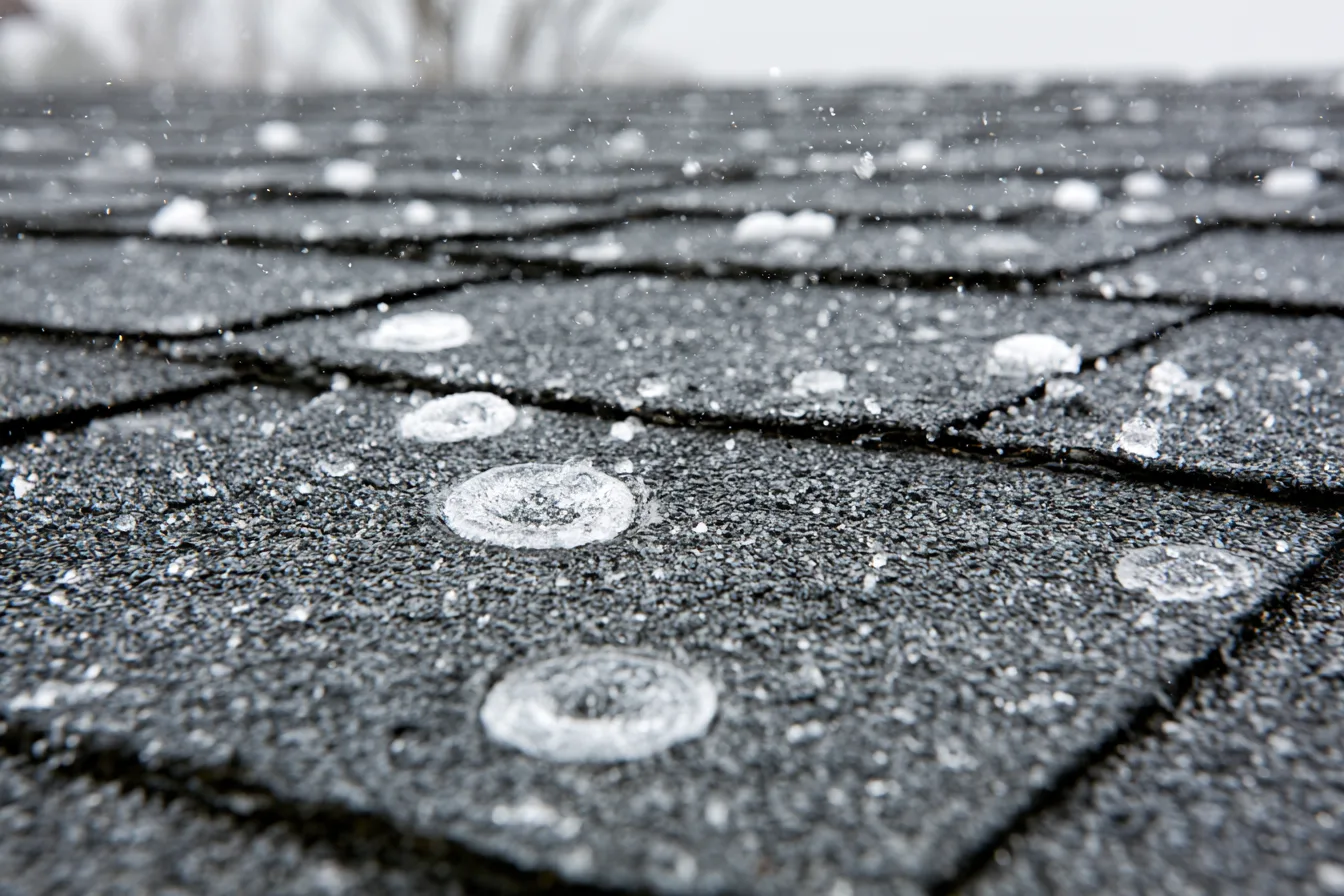
What actually fell on April 28
The NOAA reports from that evening read like a map of the corridor: 2.00 inch hail measured in Lowell, 1.50 and 1.00 inch reports in town minutes apart, 2.75 inches at Elm Springs, and stones up to 4.00 inches measured near the elementary school in Cave Springs. Every report, with its source record, sits on the storm history page.
Two-inch hail is the size where the question gets serious. It is bigger than a golf ball, falls at highway speeds and hits a sun-cooked shingle field like a hammer wrapped in ice. Some roofs shrug it off and plenty do not, and from the yard the two look identical.
Why nothing leaked the next day
Hail rarely opens a roof on impact. What it does is bruise: granules get crushed into the asphalt, the fiberglass mat underneath cracks, and the shingle keeps its shape while losing its strength. The roof sheds the next rain like nothing happened.
Then summer works the wounds. UV eats the exposed asphalt where granules left and thermal cycling flexes a cracked mat, and a bruise that never leaked can quietly become a split, and a split can become the stain on the dining room ceiling, months or years later or never. By then, connecting any leak to any storm takes real evidence instead of memory.
The two mistakes people make after hail
The first mistake is signing whatever lands on the porch. Hail brings canvassers, and urgency is their product: free roof, sign today, crew in the neighborhood. Some are legitimate; the pressure is not. Nothing about hail damage requires a same-day signature.
The second mistake is the quiet one: assuming that no leak means no damage, filing the storm under weather trivia and letting the claim window and the evidence both age out while the question stays open.
Both mistakes have the same cure: evidence before decisions. Real findings from the actual roof, weighed against the dated record, turn panic and complacency into the same thing, a decision made with facts.
What to do between now and renewal season
If your roof has not been looked at since April, get eyes on it while the weather is still mild: a free inspection through the storm and hail page checks whether your roof shows damage or is sound. It cannot identify one storm as the cause from a nearby report alone.
Do it before your policy renews if you can. Knowing where the roof genuinely stands simplifies everything later, and damage found early gives you an informed choice about filing while your options are still open.